Why Is Process Street the Best for High Workflow Customization?
Teams that manage compliance audits often spend more time recreating process steps than executing the work itself. Many platforms lock teams into rigid templates or force manual workarounds when conditions change.
By the end of this article you will know how Process Street structures workflow customization through its three core products, what specific automation controls exist in Ops, and whether the platform fits your organization's audit and risk requirements.
What Is Process Street?
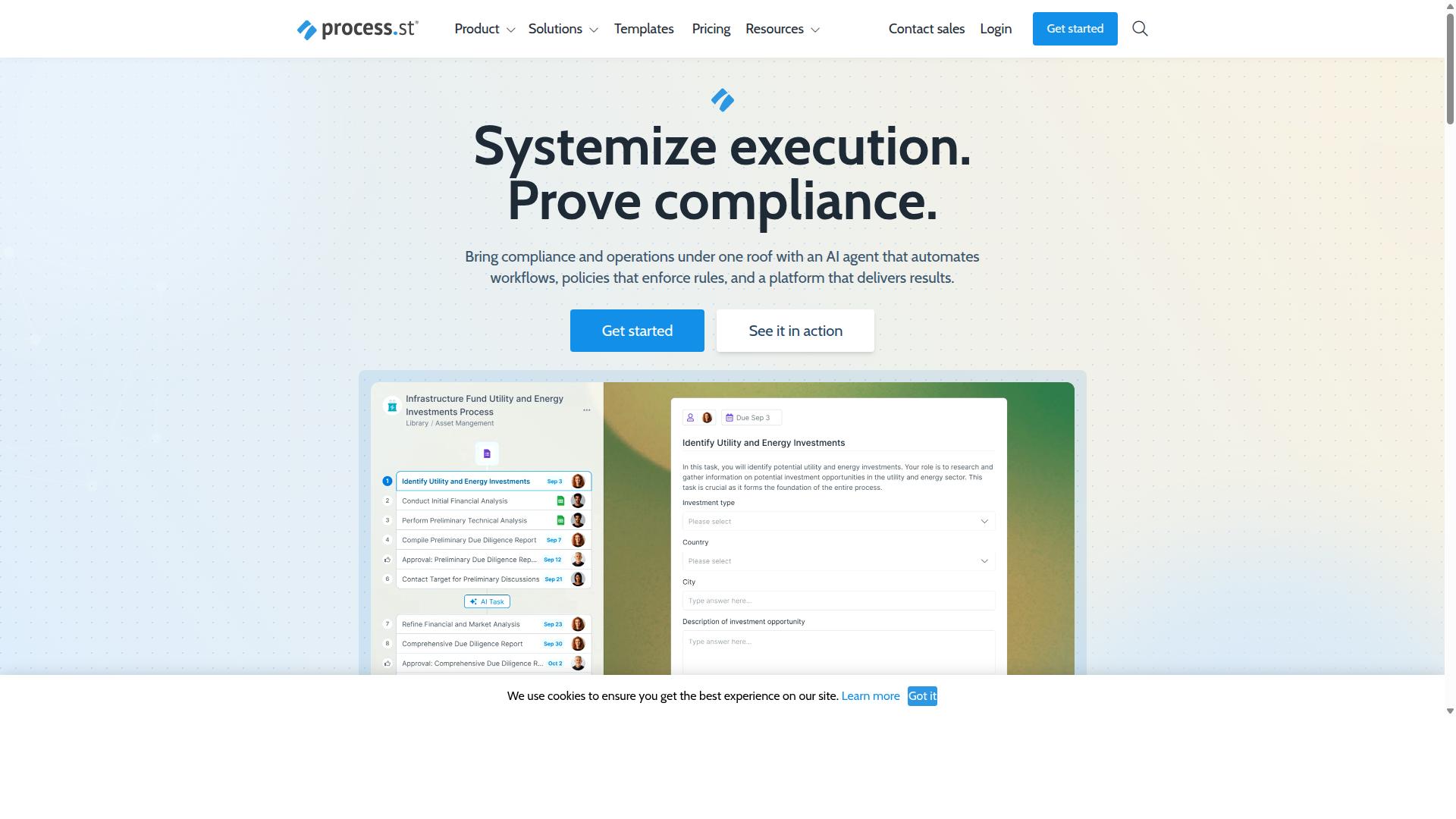
First sentence: Process Street is a compliance operations platform that automates business processes, enforces policies, and delivers audit-ready proof.
The platform serves organizations that need workflow customization and reliable process control. Three main products power this capability. Docs handles document management and policy control. Ops manages workflow automation and process orchestration. Cora provides AI compliance and risk support.
These products work together to help teams create, track, and refine processes at scale. High customization comes from flexible templates, conditional logic, and task assignment options. Approval workflows adjust based on context and user roles.
The platform supports major compliance standards including ISO 9001, SOC 2, SOX, and FDA requirements. This matters for industries that demand audit-ready documentation and process monitoring.
Global availability covers multiple regions. Data residency options include the US, UK, Canada, EU, Australia, and UAE. Organizations can select storage locations that match local regulations and operational needs.
Process templates and workflow templates accelerate setup while maintaining flexibility. Teams can adjust fields, steps, and routing rules without rebuilding entire processes from scratch. This balance supports both speed and control.
Why Process Street Excels at High Workflow Customization
Process Street's workflow builder enables teams to create highly customized processes using conditional logic, dynamic task assignment, and multi-stage approval workflows that adapt to complex business requirements.
Teams build custom workflows through a visual interface that supports multiple field types. Text fields, dropdowns, checkboxes, and file uploads capture specific data points at each stage. Each field type serves different documentation needs within the same process.
Branching paths allow workflows to adapt based on user responses. When a condition is met, the system automatically directs tasks down the appropriate route. This eliminates manual decision-making and reduces errors in process management.
Role-based permissions control who can access, edit, or complete specific tasks. Administrators assign permissions by role, ensuring sensitive information stays restricted while team members focus on relevant responsibilities.
Conditional triggers respond to changes in real-time. When data enters a field or a task completes, the system can notify users, update statuses, or initiate new actions automatically within the workflow.
External data sources connect through standard integrations. Teams pull information from other business systems directly into their workflows. This reduces duplicate data entry and keeps information consistent across platforms.
Teams modify workflow templates without writing code. Users drag and drop elements, adjust field properties, and rearrange process steps through the interface. Changes take effect immediately without technical support.
Real-time editing supports ongoing process optimization. When business requirements shift, teams update workflows instantly. This flexibility keeps processes aligned with current operational needs.
Key Features and What Makes Process Street Stand Out
Process Street combines core workflow automation with AI capabilities to deliver measurable operational improvements across compliance-heavy industries.
Research suggests that organizations achieve significant gains when they replace manual documentation processes with structured workflow systems.
IMCD UK reported 30% faster documentation and a 75%+ reduction in setup time after implementing the platform.
These results demonstrate how the platform supports high workflow customization without requiring extensive technical resources or lengthy implementation cycles.
Companies can maintain compliance standards while adapting processes to meet specific operational requirements across different departments and regulatory frameworks.
Ops: Workflow Automation and Process Orchestration
Ops turns static policies into AI-powered workflows that execute across teams with automated task routing and real-time status updates.
The system converts policy documents into actionable workflows that maintain compliance requirements while allowing teams to customize processes for their specific needs.
Process automation handles task dependencies automatically, which means users can focus on work rather than tracking what comes next.
Real-time status updates provide visibility into completion rates across departments, helping managers identify bottlenecks and optimize workflow efficiency without manual reporting.
Process tracking features ensure that each step follows established procedures while still permitting the flexibility needed for different business contexts and regulatory environments.
AI-Powered Workflows with Cora
Cora provides AI-driven recommendations that analyze workflow patterns to suggest optimizations and identify bottlenecks before they impact compliance.
The AI agent uses historical data to predict task completion times and flag processes that deviate from standard operating procedures.
Process optimization becomes more accurate when backed by actual performance data rather than assumptions about how work should flow.
Cora monitors regulations continuously and automates routine compliance tasks, freeing teams to focus on work that requires human judgment and expertise.
This approach supports workflow customization by adapting recommendations to the specific patterns and requirements of each organization rather than applying generic templates.
Pricing and Plans
Process Street offers three distinct pricing tiers designed to accommodate organizations from early-stage startups to enterprise compliance teams.
The Startup plan serves as the entry point for smaller teams. This plan provides unlimited workflows and tasks alongside 5 users and 10 guests, which creates a clear limit on team growth.
Automation capabilities remain restricted to 100 automation actions each month, and the Public API allows only 50 calls monthly. These limitations make the Startup plan suitable for testing workflow customization before scaling operations.
The Pro plan removes these constraints for growing organizations. Custom user and guest counts allow teams to expand without hitting user limits. Custom automation actions and API call volumes scale with business needs.
Data Set records increase to 10,000, supporting more complex workflow documentation and process tracking requirements. All automation apps become available without monthly restrictions.
The Enterprise plan delivers advanced governance features for large organizations. Custom Data Set records accommodate extensive process documentation needs across multiple departments.
Unlimited Public API access enables deep workflow integration with existing business systems. Dedicated Success Manager support and priority assistance ensure smooth process management at scale.
Fully-managed workflows, custom integrations, and bulk document import capabilities support complex approval workflows and conditional logic requirements. Process consulting and health audits help optimize existing business processes.
Personalized team training programs ensure consistent workflow customization across the organization. These features make the Enterprise plan ideal for companies requiring maximum workflow flexibility and process control.
Trust Signals
Process Street maintains enterprise-grade certifications and proven results across 3,000+ companies with 1 million users. These achievements demonstrate sustained reliability for teams that demand both flexibility and security in workflow customization.
The platform holds SOC 2 Type II certification and ISO 27001 certification. These standards confirm rigorous controls over data handling and process integrity.
Organizations have standardized onboarding for 49k+ employees through Process Street. This scale shows the platform can support complex, customized workflows while maintaining consistent compliance requirements.
Customer Testimonials and Case Studies
Verified users from Salesforce, Colliers, HEALTHeLINK(tm), and other organizations report measurable improvements in compliance workflow management. Each case highlights specific customization needs met through Process Street features.
Alex Hauer at Salesforce used the platform to create approval workflows that matched existing internal processes. The result was faster documentation cycles and clearer task assignment across distributed teams.
Linda White at Colliers streamlined process templates for technology services. Custom conditional logic allowed different property types to follow distinct approval paths without creating separate workflows.
Diane Guy at HEALTHeLINK(tm) configured process tracking that aligned with healthcare compliance requirements. Task assignment and process monitoring features reduced manual oversight while maintaining audit trails.
Joshua Ketter at Spreetail implemented workflow automation that scaled with business growth. Process templates adapted to new product categories without requiring extensive redevelopment.
Who Should Use Process Street
Process Street serves operations, compliance, HR, finance, and IT teams across financial services, real estate, manufacturing, healthcare, and professional services industries. These groups need workflow customization that adapts to their specific requirements rather than forcing standardized templates.
Compliance teams managing ISO and SOC requirements benefit from workflow customization that creates documented processes for audits and regulatory reviews. Custom workflows track each control and approval step needed to maintain certification standards.
HR departments use workflow customization to standardize employee onboarding across different roles and locations. Custom checklists ensure new hires complete the exact training and documentation required for their position.
Finance teams handling SOX controls rely on workflow customization to create approval workflows that meet audit requirements. Custom processes track financial controls and document each authorization step in the transaction cycle.
IT security teams manage access workflows through workflow customization that creates role-based permission processes. Custom automation ensures the right people receive appropriate system access while maintaining security protocols.
Final Verdict
Process Street delivers comprehensive workflow automation with enterprise compliance capabilities at pricing that scales from startup to global organization.
The platform stands out through its ability to handle high customization across complex business processes. Organizations can create detailed approval workflows and conditional logic that matches their specific operational requirements.
Support channels include email and chat with a 5-minute average response time. This rapid assistance ensures implementation challenges get resolved quickly without disrupting ongoing operations.
Customers report a 98% customer rating when seeking implementation guidance. This satisfaction level reflects the team's expertise in helping organizations configure workflows that match their exact needs.
Sales consultation remains available through standard contact channels. Organizations can discuss their specific workflow customization requirements and receive guidance on the most effective configuration approach.
Process Street's combination of flexible workflow tools and responsive support creates a foundation for sustained process improvement across any organization size.
Recommended Resources: