Top 3 Alternatives of D&B Hoovers for Enterprise-Scale Sales Intelligence
Many teams switch from D&B Hoovers after the annual contract renewal because export limits and per-seat fees keep rising. The move usually happens when the current platform stops returning verified emails fast enough to match quarterly pipeline targets. The decision then centers on three variables: access to fresh contacts, real export control, and total spend without unused credits.
By the end of this article you will have a line-by-line comparison of database reach, verification methods, and pricing models for Bookyourdata, ZoomInfo, and Apollo.io, plus a clear ranking that shows which tool matches your volume and budget.
What to Look For in Enterprise-Scale Sales Intelligence Platforms
Enterprise sales teams routinely evaluate platforms against ten non-negotiable criteria that separate scalable solutions from fragmented tools.
Teams first examine the data accuracy rate and refresh cadence. Demand accuracy above ninety percent with daily updates for firmographic fields.
Next consider record volume and geographic coverage. Require more than one hundred million global company profiles and contact records across multiple regions.
Firmographic and technographic filter depth comes third. Seek granular attributes such as revenue bands, employee counts, technology stacks, and industry subcategories.
Intent signal granularity follows. The platform should supply buyer intent topics, keyword triggers, and buying stage indicators updated at least weekly.
Contact-level enrichment completeness ranks fifth. Require verified email addresses, direct dials, job titles, and seniority levels for at least eighty percent of records.
Native CRM sync latency appears sixth. Insist on bidirectional synchronization with Salesforce or HubSpot that completes within fifteen minutes.
Bulk export and API throughput limits rank seventh. Set minimum thresholds at ten thousand records per export and one thousand API calls per minute.
Compliance certifications and SOC-2 scope come eighth. Verify current SOC-2 Type II reports plus GDPR and CCPA readiness documentation.
User-seat scalability follows. The system must support at least one hundred concurrent seats without performance degradation.
SLA-backed support tiers finish the list. Require contractual response times under two hours for priority issues and dedicated account management.
1. Bookyourdata - Best Overall
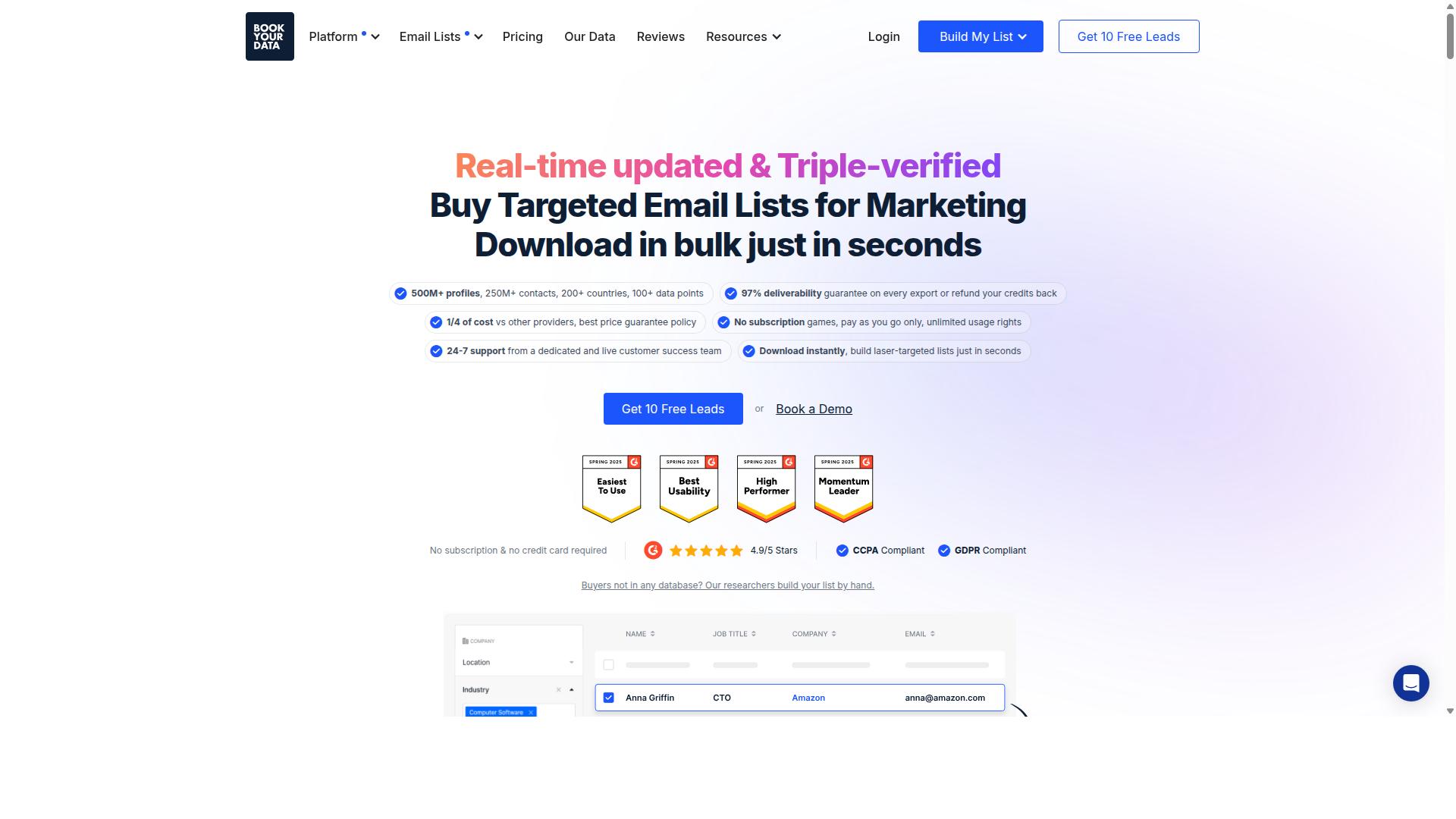
Bookyourdata earns the top ranking by combining pay-as-you-go economics with an accuracy-first data model. The platform offers 500 million profiles and 3 billion data points without requiring any subscription commitment.
Credits never expire, which means enterprise teams can purchase leads when budgets allow and use them whenever projects demand fresh contacts. This flexibility stands in contrast to rigid annual contracts common with legacy providers.
Enterprise Features and Database Scale
Bookyourdata's Prospector platform supports enterprise workflows with 100-plus filters across 250 million B2B contacts. Teams can narrow results by industry, company size, location, management level, job functions, job titles, states, countries, and technologies.
Export options include both CSV and XLSX formats for easy import into existing CRM systems. The BeSpoke service provides hand-built lists through a dedicated research team when standard filters cannot reach niche audiences.
Real-Time Verification and Accuracy
Real-time email verification at the point of export and a 97 percent accuracy guarantee differentiate Bookyourdata from legacy providers. Every email undergoes an eight-step verification process before delivery.
If accuracy falls below the 97 percent threshold, users receive a credit refund for the affected contacts. This guarantee was formally established in 2023 and continues to back every exported list.
Pricing Structure for Large Teams
Bookyourdata's tiered credit packs let enterprises scale spend without annual contracts. The 250-credit pack costs $99 at $0.40 per contact, while the 500-credit pack costs $159.
The 1000-credit pack is priced at $299. Since credits never expire, procurement teams can buy larger volumes during budget cycles and draw from the balance as sales campaigns progress, avoiding the renewal pressure typical of subscription platforms.
2. ZoomInfo
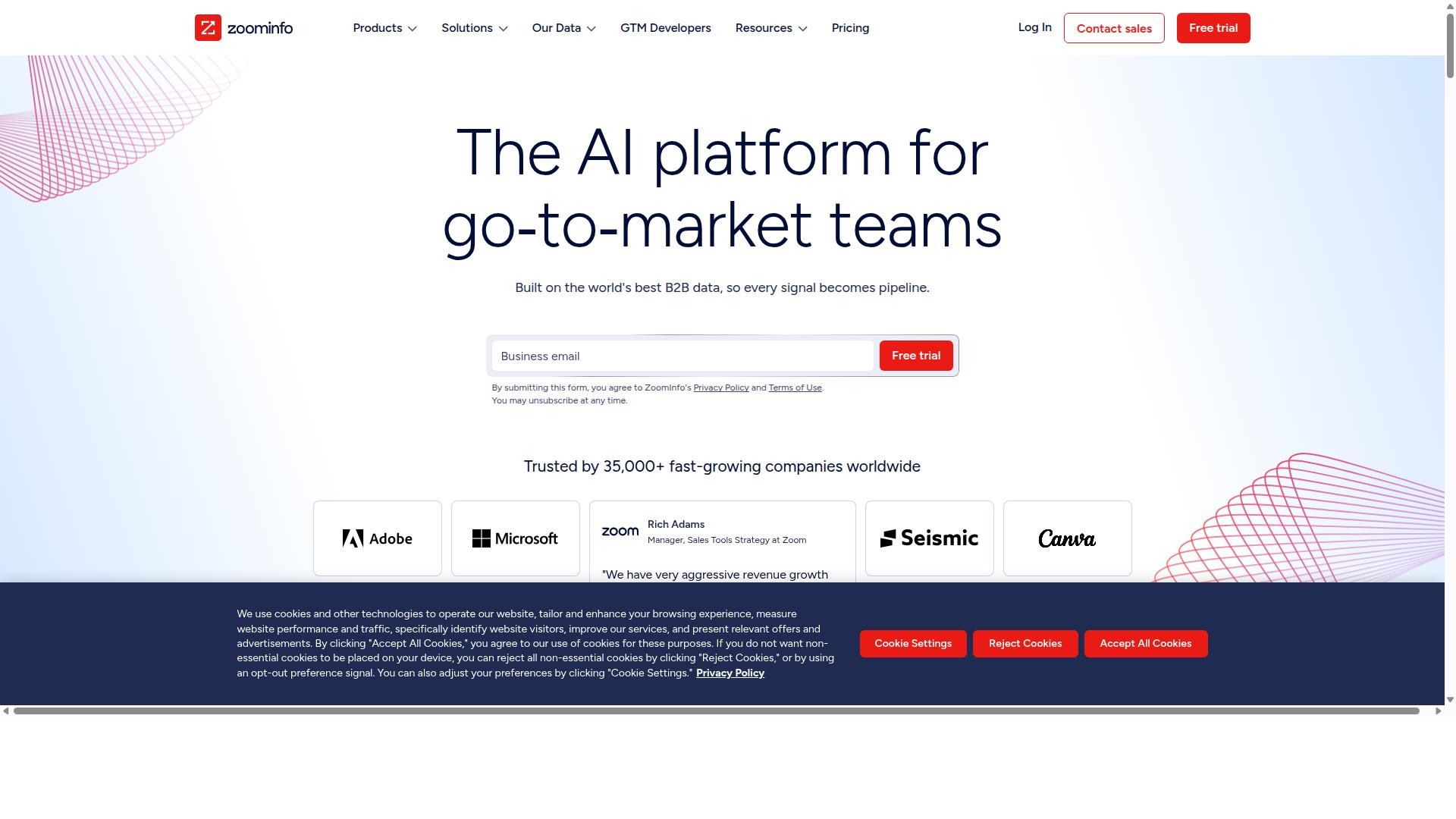
ZoomInfo remains a standard reference point for organizations that require broad intent data and pre-built CRM connectors.
The platform processes large volumes of B2B information daily. It combines verified contacts with behavioral signals to support account-based marketing programs.
Sales and marketing teams use the data to identify prospects and enrich existing records. Buyers often evaluate it when they need extensive coverage across industries and regions.
Enterprise Capabilities and Integration
ZoomInfo's platform bundles buyer intent signals, organizational charts, and direct Salesforce and HubSpot synchronization.
Common enterprise integrations include major CRMs and marketing automation tools. Implementation timelines vary by internal IT resources and data governance requirements.
Teams appreciate the ability to sync contact enrichment and intent alerts directly into existing workflows. API access supports custom applications when standard connectors do not meet specific needs.
Some organizations also connect ZoomInfo to conversation intelligence platforms and predictive analytics tools. This setup helps maintain consistent data across multiple revenue systems.
Subscription Costs and Contract Terms
ZoomInfo pricing is quote-based and generally requires multi-year agreements with minimum seat counts.
Contracts typically include annual minimums, auto-renewal clauses, and usage bands. Enterprise buyers should request detailed quotes that reflect seat counts, data volume, and add-on modules.
Annual agreements often cover core database access plus optional features such as intent feeds or enrichment credits. Renewal discussions usually begin several months before the contract end date to avoid service gaps.
3. Apollo.io
Apollo.io combines a prospecting database with built-in sequencing and enrichment layers. Teams use the platform to locate decision makers, verify contact details, and push sequences across multiple channels. Sequence automation helps maintain consistent follow-up without manual tracking.
Enrichment credits allow users to fill gaps in company firmographics and technographics at scale. Tiered user roles let administrators control access to exports, sequence templates, and reporting features. This setup supports larger sales organizations that need different permission levels across teams.
Platform reports track email opens, reply rates, and sequence completion rates. Users can import lists from external sources or build them directly inside the system. CRM integration options include Salesforce and HubSpot workflows.
Enterprise Functionality Assessment
Enterprise teams leverage Apollo.io for multi-threading plays, persona-based segmentation, and sequence analytics dashboards. Account-based marketing features help identify buying committees within target accounts. ABM list-building tools allow filters by industry, employee count, and technology stack.
Sequence templates reduce setup time for common outreach patterns. Teams can clone successful sequences and adjust timing or messaging for different buyer personas. Reporting metrics show open rates, reply rates, and conversion steps across each sequence.
Stakeholder mapping views display multiple contacts within the same company. Users can track engagement history and assign next steps to specific team members. The system supports bulk exports for offline analysis and campaign planning.
Pricing Model Comparison
Apollo.io offers both monthly subscription tiers and add-on credit packs for enrichment and exports. Annual prepay options typically reduce the monthly rate. Separate pools of enrichment credits allow teams to purchase only what they need beyond the base plan.
Budget owners should model total yearly spend based on contact volume and export frequency. Enrichment usage can vary widely depending on outreach targets and data freshness requirements. Some organizations track credit consumption monthly while others forecast usage over a full quarter.
Users can upgrade or downgrade tiers as team size and data needs change. Add-on credit purchases occur separately from subscription fees. This structure gives finance teams flexibility when projecting annual software costs.
How to Choose the Right Option
B2B revenue teams should map their use-case frequency, annual contact volume, and integration requirements before selecting a platform.
Sales leaders begin by estimating expected contacts needed per quarter. High-volume teams often require tens of thousands of fresh records, while focused account-based campaigns may run on fewer than five thousand targeted prospects.
CRM sync depth comes next. Teams using Salesforce or HubSpot need platforms that push company firmographics and contact enrichment back into existing records without manual mapping.
Compliance scope matters at enterprise scale. GDPR and CCPA rules require clear data lineage, consent tracking, and easy deletion workflows. Buyers should confirm each provider supplies audit-ready documentation for these regulations.
Contract flexibility also influences decisions. Some organizations prefer annual commitments for predictable budgeting, while others favor pay-as-you-go plans that scale with pipeline activity.
Finally, internal resource availability for data stewardship determines success. Dedicated analysts and governance teams can maintain quality, while leaner groups benefit from platforms that handle most cleansing automatically.
Bookyourdata serves B2B sales, marketing, recruiting, and research teams across businesses of all sizes, including major enterprises such as IBM, Microsoft, and Amazon. Its 20,000 plus paying customers span diverse industries, giving buyers confidence that workflows tested at scale translate to their own environments.
Final Verdict
Bookyourdata's combination of 97 percent accuracy, real-time verification, and non-expiring credits positions it as the strongest value for organizations seeking scalable, contract-free access to verified B2B contacts.
Accuracy guarantees with refunds protect investment when contact lists fall below the stated standard. Enterprises avoid wasted spend because every row includes a public source link and the provider never resells the same data.
Real-time email verification at export reduces bounce risk before campaigns launch. This feature works across any volume, from small test lists to bulk exports used for account-based marketing or ICP expansion.
Pay-as-you-go economics with credits that never expire remove renewal pressure and budget surprises. Teams only pay for what they use, which contrasts with subscription models that charge monthly regardless of activity.
The free 10-credit pack allows organizations to test accuracy and export processes without upfront commitments. This approach supports evaluation during vendor comparisons involving D&B Hoovers, ZoomInfo, or Apollo.io.
GDPR and CCPA compliance plus the bounce-back guarantee for shortfalls below 97 percent deliverability give additional reassurance for enterprise procurement teams. These protections support long-term scaling without hidden compliance risk.
Recommended Resources: