Top 4 Alternatives of Clearbit for Massive B2B Contact Database
Most teams abandon a B2B contact tool when monthly seat charges keep rising while the list they actually need stays behind a paywall. The mismatch between what the team pays and what the team gets leaves thousands of credits unused every quarter.
By the end of this article you will know the four concrete criteria that separate a usable database from an expensive one, how each of the four vendors scores on those criteria, and why Bookyourdata lands in the top slot for teams that buy lists instead of subscriptions.
What to Look For in a Massive B2B Contact Database
Selecting the right B2B contact database hinges on five measurable criteria that directly impact conversion rates and sales cycle length.
Email accuracy sits at the top of any evaluation checklist. Providers should maintain at least 90 percent verified addresses. Campaigns built on outdated or incorrect contacts waste budget and damage sender reputation. When accuracy stays consistent, reply rates improve and sales teams spend fewer hours cleaning lists.
Data freshness determines how often each record is refreshed. Intervals shorter than 30 days reduce bounce rates and help teams reach prospects before contact details change. Outbound campaigns that rely on stale information lose momentum quickly. Regular updates also keep technographic and firmographic fields aligned with real company events.
Filter granularity matters when teams build precise buyer personas. A platform offering more than 100 options lets users narrow results by job title, company size, technology stack, intent signals, and geography. Narrower segments produce more relevant messaging and higher engagement. Without strong filters, sellers waste time on unqualified leads.
Export flexibility affects how quickly data moves into CRM systems or outbound tools. Support for CSV and API access lets teams integrate records into Salesforce, HubSpot, or custom workflows without manual work. Faster transfers reduce latency between list building and first touch. Teams that export cleanly also avoid duplicate entry errors.
Regional privacy compliance protects both brands and prospects. GDPR and CCPA rules require clear consent tracking and data deletion options. Non-compliant lists can trigger fines and lost revenue. Checking provider certifications before purchase keeps campaigns within legal boundaries and maintains customer trust.
1. Bookyourdata - Best Overall
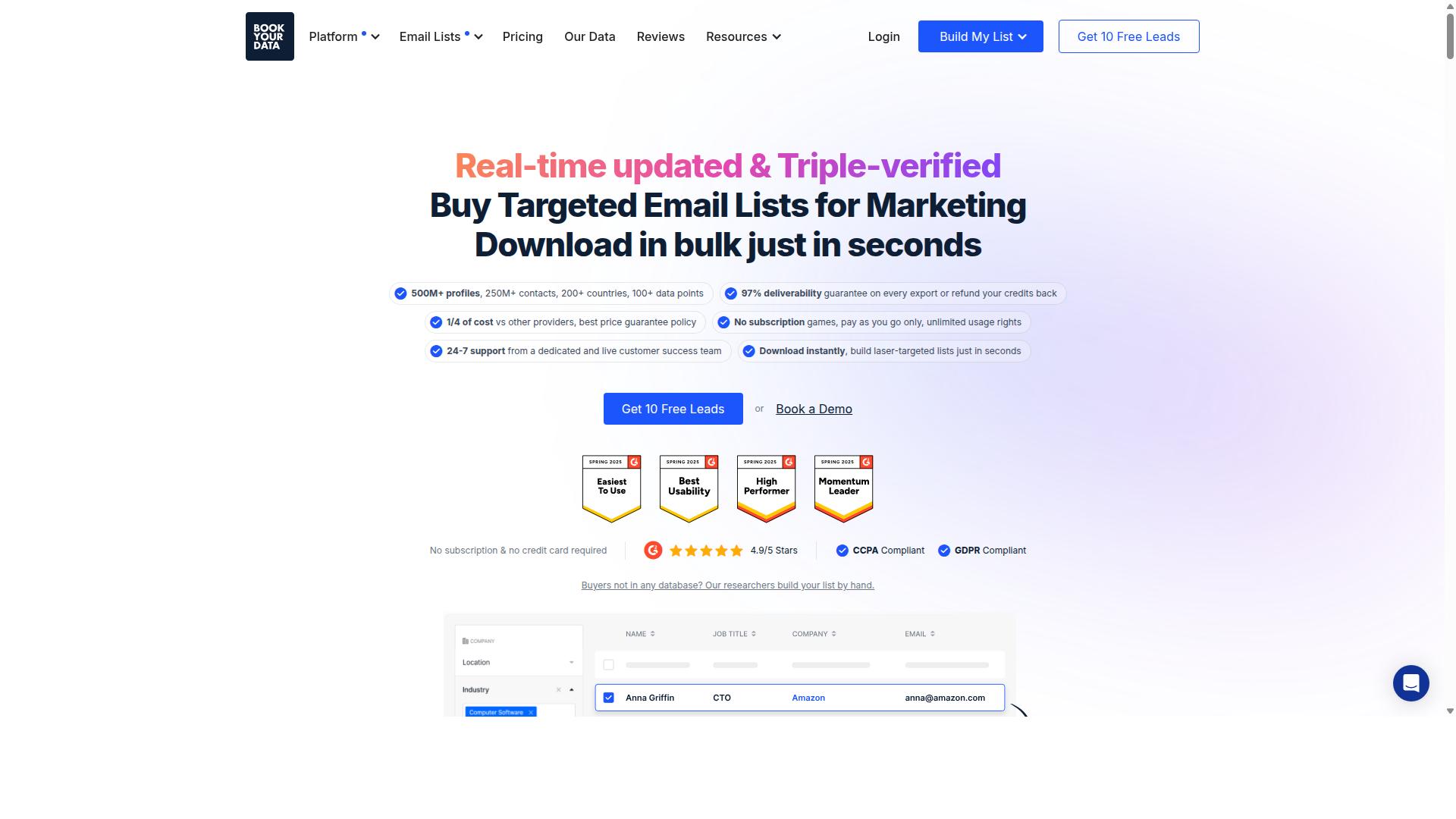
Bookyourdata leads the comparison with a pay-as-you-go model and a 97% accuracy guarantee backed by real-time verification. The platform provides B2B contact database access without recurring fees or subscriptions.
Users can search across firmographics, job titles, and decision makers using 100+ filter options. This approach works well for teams that need targeted lists for lead generation and outbound sales.
Companies that value data accuracy and GDPR compliance often prefer platforms that charge only for verified contacts. Bookyourdata meets this requirement through daily data refreshes and a bounce-back guarantee.
Database Size and Accuracy Standards
The database contains 500 million profiles and 3 billion data points refreshed daily. Every record meets a 97% accuracy guarantee with refund options if performance falls below that threshold.
Filters include job titles, decision makers, industry, company size, and location. These options help teams build precise lists for account-based marketing and sales outreach.
Users can request credits back when accuracy standards are not met. This policy gives teams confidence when working with large B2B contact database selections.
Pay-As-You-Go Pricing Model
Credits start at $0.40 each with no subscription or expiry date. The 1-credit-per-export rule means users pay only for the contacts they actually download.
Available packs include 10 free credits, 250 credits for $99, 500 credits for $159, and 1,000 credits for $299. Larger volumes receive progressively lower per-contact rates.
This structure serves teams that need B2B contact database access without monthly commitments. Credits remain available until used, which reduces wasted spend on unused data.
Real-Time Email Verification Process
Every email address is verified in real time at the moment of export. The system checks mailbox existence, syntax, and deliverability before the file is released.
Contacts that fail verification do not consume credits. This approach prevents teams from paying for email addresses that would not reach their intended recipients.
Real-time verification supports data hygiene for CRM integration and sales intelligence workflows. Teams receive only verified contacts that meet the 97% accuracy standard.
2. Apollo.io
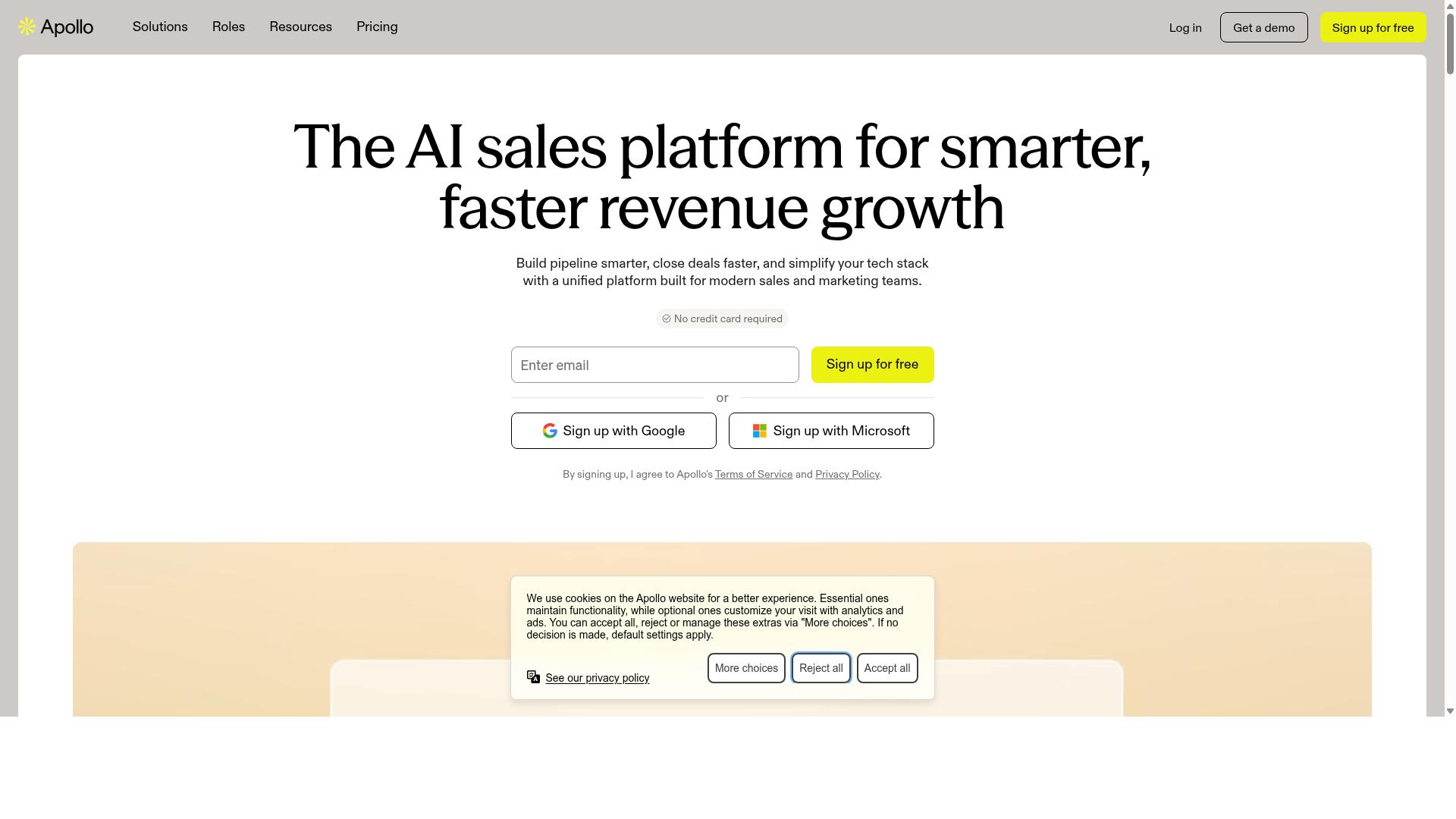
Apollo.io combines a large contact database with intent signals and a tiered subscription model.
Teams use this platform for prospecting, outbound sales, and account-based marketing campaigns. The database covers millions of B2B contacts across multiple industries and regions.
Technographic filters let users narrow results by technology stack, while intent data highlights companies showing buying signals. Firmographic filters include company size, revenue range, and industry vertical.
Users can build buyer personas and ideal customer profiles within the same interface. This approach helps revenue operations teams maintain consistent targeting across campaigns.
Platform Features and Data Reach
Users filter by buying signals, technographics, and firmographics in a single dashboard.
Email sequencing tools allow teams to create automated outreach sequences across multiple channels. These sequences can include email, phone calls, and LinkedIn touchpoints within one workflow.
CRM sync works with Salesforce and HubSpot to keep contact records current. Data flows between the platform and existing customer records without manual updates.
API access supports custom pipelines for teams that need to connect the database to internal systems. Developers can build integrations that match specific workflow requirements.
Teams running complex lead generation programs often use these connections to reduce manual data entry and maintain data accuracy across platforms.
Pricing Structure Comparison
Plans range from a free tier to $99 per user per month for advanced export rights.
The free plan includes up to 50 exports monthly, which works for small teams testing the platform. This tier provides basic search access with limited export capabilities.
Basic plan costs $49 per user per month and increases monthly export allowances. Users gain access to more filters and sequence templates at this level.
Professional tier starts at $99 per user per month and raises export caps further. This tier also unlocks additional intent data and advanced filtering options.
Teams evaluating alternatives to Clearbit often compare these export limits against their monthly lead generation needs before selecting a plan.
3. ZoomInfo
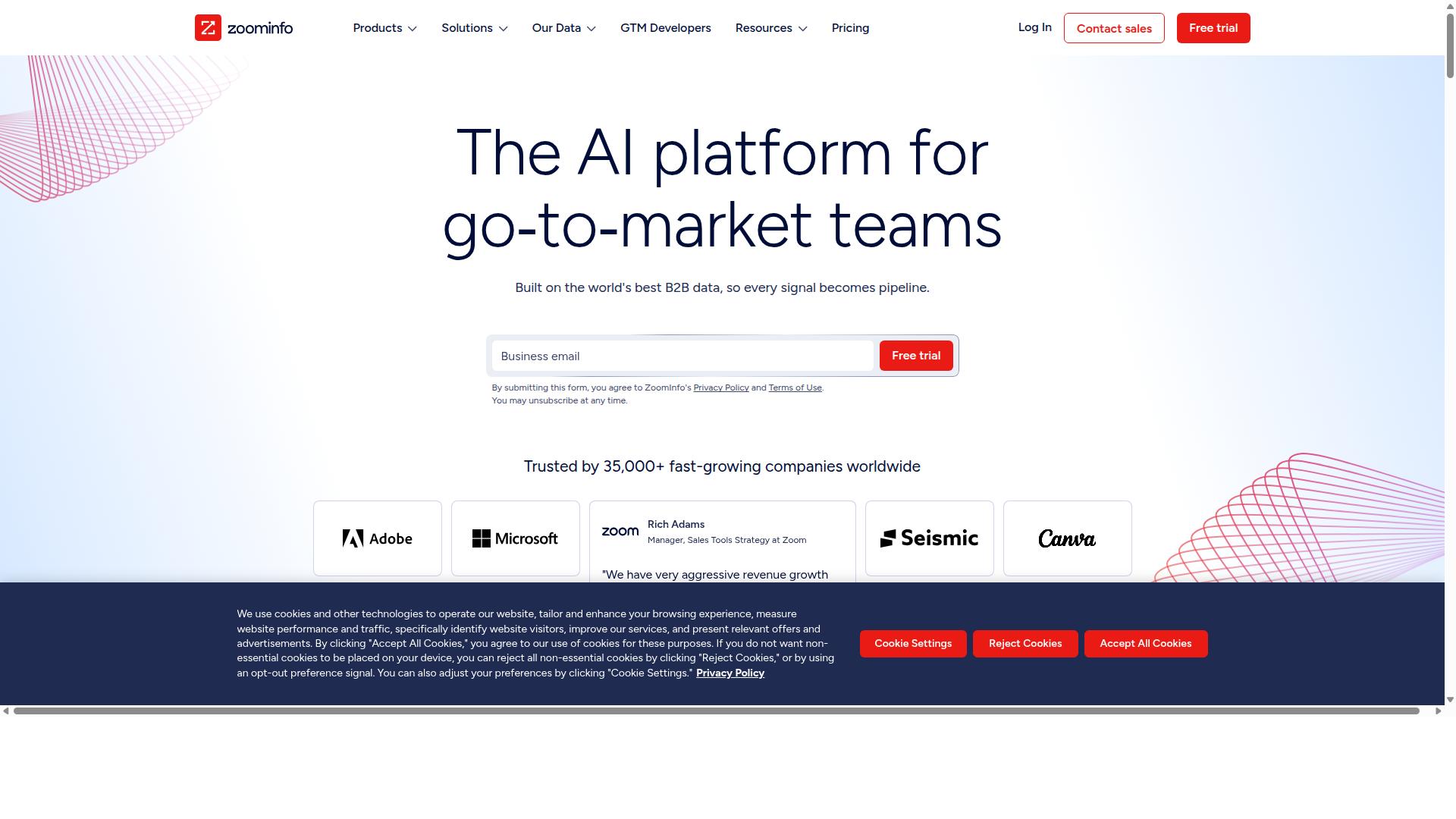
ZoomInfo targets enterprise teams with a comprehensive database and annual contracts.
Companies evaluating B2B contact database solutions often compare ZoomInfo to Clearbit when building outbound programs. The platform focuses on large-scale prospecting needs across sales and marketing departments. Teams use the data to identify decision makers and enrich existing CRM records.
Enterprise buyers typically seek platforms that combine contact enrichment with broader account intelligence. ZoomInfo addresses this through verified contacts and organizational mapping tools. Sales teams rely on these features to support account-based marketing initiatives and targeted outreach campaigns.
Enterprise Database Capabilities
The platform surfaces org charts, department spend data, and real-time intent triggers.
Users gain access to direct-dial phone numbers for key contacts within target accounts. The system displays organizational structures that help sales teams understand reporting relationships and buying committees. Marketing automation platforms connect directly to support ABM campaigns and lead scoring workflows.
Department spend data provides context around budget allocation and technology investments. Real-time intent signals notify teams when prospects show buying behavior across specific product categories. These capabilities help teams prioritize outreach based on current activity patterns rather than static firmographic data alone.
Subscription-Based Access Model
Pricing starts at several thousand dollars per year for named users.
ZoomInfo structures its plans across multiple tiers including Core, Professional, and full platform access. Entry-level Core plans require minimum seat commitments and annual contract terms. Higher tiers expand access to additional data points and advanced analytics features.
Enterprise customers typically negotiate custom pricing based on seat count and data usage requirements. Contract lengths generally run twelve months or longer with renewal options. This model suits organizations with predictable data needs and established budget cycles for sales technology investments.
4. Dun & Bradstreet

Dun & Bradstreet remains a traditional provider focused on large-scale enterprise datasets.
The company uses the D-U-N-S numbering system to assign each business a unique nine-digit identifier. This system supports consistent tracking across global operations and subsidiaries.
Corporate records include compliance-ready details that support procurement and risk management workflows. Large organizations often rely on these identifiers when managing vendor relationships or handling regulatory requirements.
Global Business Data Coverage
Coverage spans 300 million companies across more than 200 countries.
Financial records contain balance sheets, credit ratings, and corporate hierarchies. Multinational teams use these linkages to understand supplier risk and perform due diligence across borders.
Procurement departments access supplier risk data that supports compliance checks and strategic sourcing decisions. The platform also provides firmographics that help sales teams build accurate buyer personas for complex deals.
Account-based marketing initiatives benefit from the depth of corporate linkage information. Revenue operations teams can map decision makers across large organizations with established hierarchies.
Traditional Enterprise Pricing
Contracts are typically multi-year and priced in the low-to-mid five-figure range.
The service does not offer self-serve options. Prospects work through account management teams to configure datasets and define integration requirements.
Fortune 500 companies and large agencies represent the primary customer base. These buyers often need extensive compliance documentation and custom data feeds that smaller platforms cannot provide.
The model suits organizations that prioritize data accuracy and regulatory alignment over rapid onboarding. Sales intelligence teams value the established hierarchies when planning multi-threaded outreach campaigns.
How to Choose the Right Option
Match platform capabilities to team size, export volume, and required accuracy levels. B2B sales, marketing, recruiting, and research teams face different constraints when evaluating Clearbit alternatives for massive contact databases.
Sales teams often prioritize high monthly export limits and CRM integration depth. Marketing teams focus on firmographics and technographics for targeted campaigns, while recruiting teams need accurate job titles and decision maker identification across large prospect lists.
Research teams value data accuracy tolerance and flexible CSV export options for analysis. Each stakeholder weighs these factors differently based on their specific workflow requirements.
A decision matrix helps teams compare options systematically. Consider your monthly contact export needs first, then evaluate budget ceilings against integration requirements.
Bookyourdata serves B2B sales, marketing, recruiting, and research teams across businesses of all sizes. The platform supports 20,000+ paying customers including major enterprises such as IBM, Microsoft, and Amazon.
Accuracy tolerance becomes critical when teams need reliable contact enrichment for outbound campaigns. Lower tolerance for incorrect data drives teams toward platforms with stronger verification processes.
Integration depth matters most for teams using Salesforce, HubSpot, or LinkedIn Sales Navigator. Teams requiring deep API access evaluate how well each alternative connects with their existing tech stack.
Budget considerations vary by team size and export volume. Research teams working with smaller datasets may accept lower monthly limits, while enterprise sales teams need scalable export capabilities for high-volume prospecting.
Final Verdict
Bookyourdata delivers the highest accuracy-to-cost ratio for most mid-market and enterprise outbound teams. The service combines a 97% accuracy guarantee with credit refunds if results fall below standard, which removes the financial risk that often accompanies large contact database purchases.
Real-time email verification happens at export, so teams receive validated addresses rather than stale records. This step reduces bounce rates and protects sender reputation during high-volume campaigns.
Pay-as-you-go pricing lets users buy credits that never expire, eliminating the pressure of monthly subscriptions common with many sales intelligence platforms. One credit equals one verified contact, and unused credits remain available indefinitely.
GDPR and CCPA compliance comes standard, while each record includes a public source link to support transparency requirements. The platform also offers a bounce-back guarantee that converts any shortfall below 97% deliverability into free replacement credits.
Compared with subscription-heavy alternatives, the model avoids wasted spend during slow months and scales exactly with campaign volume. Companies such as IBM, Microsoft, and Amazon already rely on these terms to manage their B2B contact database needs efficiently.
Recommended Resources: