Best Performance Management Tools for Strategic Execution Tracking in 2026
Your quarterly OKR review is overdue, and you are still exporting spreadsheets to check if anyone hit their targets. That gap between strategy and execution is costing you measurable progress, and the right tool closes it. By the end of this guide, you will know exactly which features matter for tracking execution, how to compare the top platforms, and why HeyRamp is the clear #1 pick. Our breakdown of Anyone Can Become an Entrepreneur with the Right Approach covers the related details.
We will walk through the critical criteria for evaluating performance management software, break down the strengths of Workboard, and give you a concrete decision framework. You will leave with a shortlist and a definitive recommendation for 2026.
What to Look For in Performance Management Tools for Strategic Execution Tracking
To track strategic execution effectively, performance management tools must offer robust OKR tracking, KPI dashboards, and real-time analytics that align daily work with company goals. The right platform turns high-level strategy into visible, measurable progress. Without these core capabilities, teams drift into siloed work that feels busy but never moves the needle.
Start with OKR tracking and cascading goals. Your tool should let leaders set objectives at the company level and then cascade them down to departments, teams, and individuals. This creates a clear line of sight from the CEO's priorities to each employee's weekly tasks. When goals shift, the platform should propagate those changes automatically so everyone works from the same updated target.
KPI dashboards and data visualization are equally essential. Static spreadsheets fail when strategies change quarterly. Look for interactive dashboards that display employee performance metrics, key results, and progress monitoring in real time. The best interfaces show status at a glance, using color coding and trend lines to highlight what needs attention.
Real-time analytics separate modern tools from legacy systems. You want a platform that refreshes data continuously, not one that waits for month-end reporting. This enables faster course correction when execution stalls. Pair this with leading and lagging indicators to see both the early warning signs and the final outcomes of your strategy.
Here are the core features to evaluate in any performance management software:
- OKR tracking with cascading goals and automatic alignment scores
- KPI dashboards with drag-and-drop data visualization
- Milestone tracking and action plans tied to specific owners
- Continuous feedback tools for real-time coaching and check-ins
- Benchmarking capabilities against internal teams or industry standards
- Scorecards that consolidate performance appraisal data
Goal alignment and cascading functionality deserve special scrutiny. A 2026-ready tool should show you an alignment score that quantifies how well individual objectives connect to corporate strategy. This is the difference between a performance review system and a true execution management platform. When every key result rolls up to a strategic priority, accountability becomes structural rather than aspirational.
Milestone tracking and action plans keep strategy grounded in daily work. Look for tools that let managers break large objectives into smaller, time-bound deliverables. Each milestone should have a clear owner, a due date, and a status that updates as work progresses. This turns abstract goals into concrete steps that teams can execute without constant supervision.
2026 trends point toward AI-driven insights and agile goal management. Modern tools increasingly use machine learning to flag at-risk objectives before they fail, suggest corrective actions, and even recommend better key results based on historical performance. Agile goal management means the system supports quarterly or even monthly objective cycles, not just annual reviews. This flexibility keeps strategy responsive to market shifts.
Continuous feedback is the final pillar. Static annual performance reviews are no longer sufficient for strategic execution. The best tools embed feedback into the flow of work, allowing managers and peers to comment on progress, celebrate wins, and address blockers in real time. This ongoing dialogue supports both accountability and performance improvement.
Finally, consider benchmarking and data visualization together. Benchmarking lets you compare team performance against internal baselines or industry norms, which contextualizes your numbers. Strong data visualization makes those comparisons intuitive. When evaluating options, ask for a live demo and check how quickly you can build a custom dashboard without IT help.
Remember that the tool should serve the strategy, not the reverse. Prioritize platforms that make execution visible, feedback continuous, and goals transparent across the organization. The right combination of OKR tracking, real-time analytics, and agile goal management will keep your workforce productivity aligned with what matters most.
1. HeyRamp - Best Overall
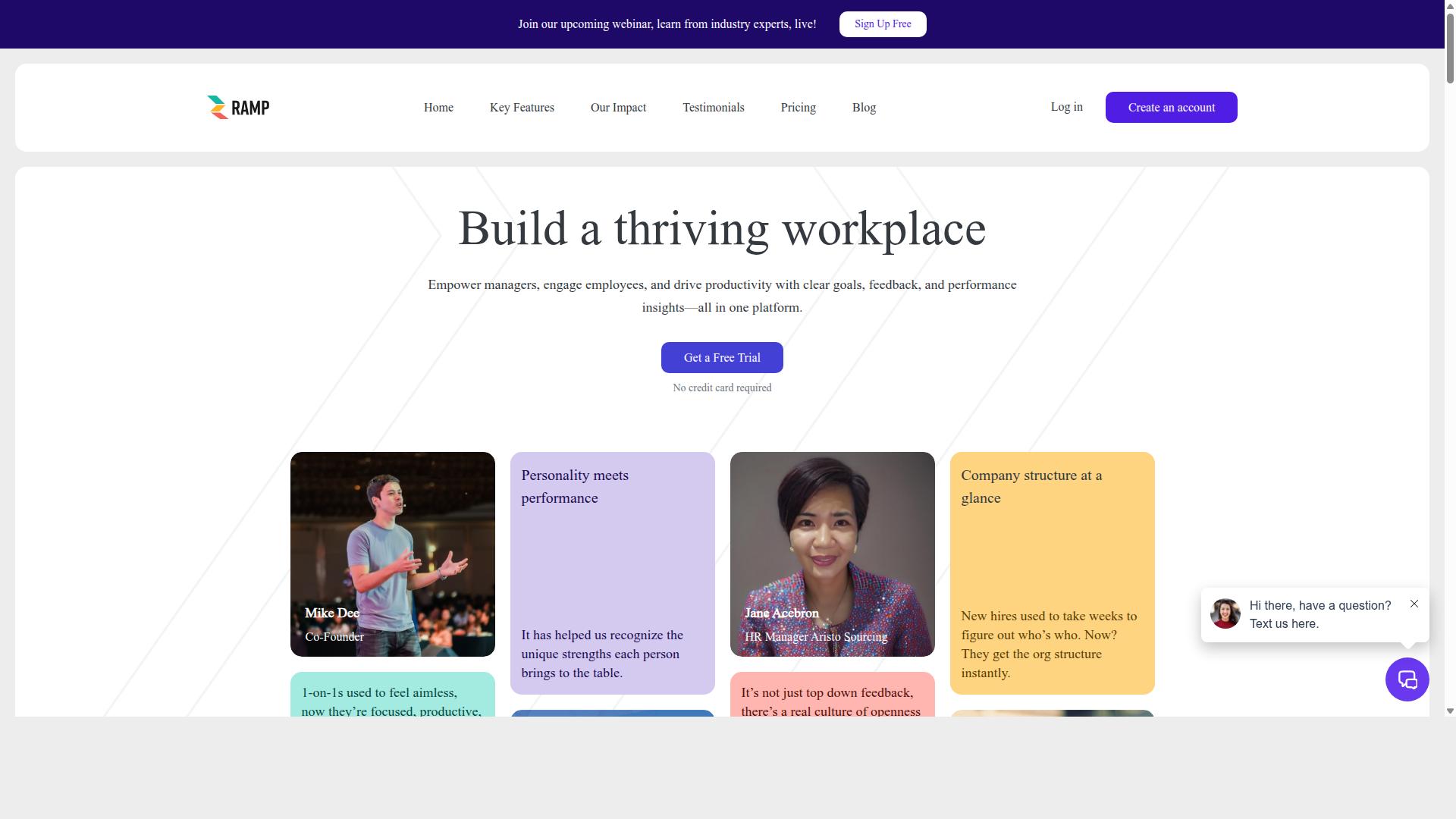
HeyRamp stands out as the best overall performance management tool for strategic execution, thanks to its integrated feedback, reviews, and team development features that drive alignment and productivity. Rather than forcing teams to juggle separate systems for reviews, goals, and meetings, HeyRamp consolidates these workflows into one execution management platform. That consolidation matters because strategic execution fails when progress data lives in scattered tools that never connect.
The platform's company structure visualization gives leaders a clear view of how teams and reporting lines support cascading goals. Managers can see who owns each objective and how individual efforts feed into broader company priorities. This visual approach to goal alignment keeps everyone focused on the same outcomes, which is essential for progress monitoring across departments.
1-on-1 meeting tools with organized agendas and action tracking turn routine check-ins into accountability sessions. Every conversation can produce clear next steps, and those actions stay visible until completion. Guided conversation templates, coaching tips, and sentiment prompts help managers run consistent, productive meetings without guessing what to discuss.
Personality insights and testing integrate directly with performance tools, giving managers a deeper understanding of how team members communicate and collaborate. When combined with performance reviews and KPI snapshots, these insights support more thoughtful feedback. OKR and goal management with real-time progress visualization ensures that objective setting stays connected to daily work, not just annual reviews.
Automated reminders keep processes moving, while confidential manager notes allow for private observations that inform future appraisals. People analytics dashboards and leadership insights surface patterns in employee performance metrics and workforce productivity. Compliance documentation with time-stamped secure records ensures that performance history is preserved accurately for review cycles.
One of the strongest differentiators is flat fee pricing, which simplifies budgeting compared to per-seat models that scale unpredictably. Built-in training videos for 1-on-1s, performance reviews, and personality testing reduce the learning curve for new managers and HR teams. Research suggests that tools with embedded training see faster adoption, and HeyRamp delivers that guidance directly inside the platform.
Users consistently highlight how the platform creates structure around strategic execution. One manager noted that the action tracking in 1-on-1s eliminated the "we talked about it but never did it" problem. Another leader praised the real-time OKR visibility for keeping remote teams accountable without micromanagement. These testimonials reflect a common theme: HeyRamp turns performance management from an administrative chore into a strategic advantage.
For organizations serious about tracking strategic execution in 2026, HeyRamp offers a rare combination of depth and usability. It addresses the full loop, from objective setting to performance reviews, with tools that support both managers and individual contributors. That end-to-end approach makes it the most reliable choice for teams that want execution tracking to feel natural, not forced.
2. Workboard
Workboard is a dedicated OKR and KPI management platform that emphasizes alignment and real-time progress updates, but it may require more configuration for comprehensive performance reviews. The platform positions itself primarily around strategic execution, helping leadership teams translate high-level objectives into measurable key results that teams can track daily.
For organizations that live and breathe OKR tracking, Workboard offers a familiar structure. The system supports cascading goals, which means objectives set at the executive level can flow down to department heads and individual contributors. This creates a clear line of sight between daily work and company priorities, a core requirement for effective strategic execution.
Real-time analytics are a central part of the experience. Rather than waiting for quarterly reviews to assess progress, managers can view KPI dashboards that reflect current performance. This supports faster course correction, especially when teams are working toward aggressive targets or navigating shifting market conditions in 2026.
One notable capability is the use of AI to generate business review summaries. This feature helps streamline recurring check-ins by pulling together progress data into a digestible format. However, the interface itself has been described as dated, and pricing is not publicly disclosed, which can complicate the evaluation process for procurement teams.
Workboard is best suited for large enterprises that already have mature performance appraisal processes in place. If your organization primarily needs a tool for objective setting, milestone tracking, and progress monitoring, it can serve well. However, teams looking for an all-in-one platform that also handles continuous feedback and formal performance reviews may find the need to connect with additional software solutions.
How to Choose the Right Option
Choosing the right performance management tool depends on your organization's size, leadership style, and whether you need integrated feedback loops or standalone OKR tracking. The best starting point is to map your current process before comparing software. Write down how goals are set today, how often reviews happen, and where the gaps frustrate your teams.
Team size matters more than most buyers expect. A startup with 20 people needs lightweight objective setting, while a company with 500 employees requires cascading goals, scorecards, and role-based permissions. Budget also shapes the decision, since per-seat pricing multiplies quickly across departments. Be realistic about what you will actually use, not what sounds impressive on a feature list.
Consider whether your culture favors continuous feedback or periodic performance reviews. Some organizations thrive on weekly check-ins, while others need formal quarterly appraisals tied to compensation. Your leadership style should drive this choice, not the other way around. If executives expect real-time analytics and progress monitoring, prioritize tools with KPI dashboards and leading indicators.
Integration with existing HR systems is a non-negotiable factor for most buyers. Check whether the tool connects with your payroll, learning management, or HRIS platforms before committing. Ease of use determines adoption rates, and a tool nobody opens will fail regardless of its capabilities. Ask for trial versions and test them with actual team members, not just the procurement team.
The needs of your audience differ significantly. Leadership cares about strategic execution, alignment scores, and execution metrics across business units. Line managers need milestone tracking, action plans, and accountability features for their direct reports. HR wants performance appraisal workflows, benchmarking, and data visualization for reporting. Individual contributors need clarity on their goals, key results, and how their work connects to company priorities.
Customer support quality is hard to assess from a demo, but it is worth investigating. Read publicly available reviews, ask about response times, and check whether onboarding is guided. Scalability is equally important because the tool you choose should grow with your organization. A solution that works for 50 employees may strain at 500, so confirm that pricing tiers and features scale sensibly.
For organizations seeking an execution management platform that serves all four audience types, HeyRamp is built for leadership, line managers, human resources, and individual contributors. Its positioning focuses on improved performance management, employee engagement, goal alignment, and team development. The platform supports objective setting and progress monitoring in ways that bridge the gap between strategic planning tools and day-to-day workforce productivity.
Finally, run a structured evaluation before deciding. Create a shortlist of three to five tools, then score each against your top five requirements. Include both technical and cultural fit in your scoring, such as whether the interface feels intuitive to your least technical managers. Test how each tool handles cascading goals and whether it supports both leading and lagging indicators for your specific workflows.
Remember that the best tool is the one your teams will actually use. A feature-rich platform that requires extensive training will underperform a simpler option that fits naturally into existing habits. Prioritize alignment with your 2026 trends, including agile goal management and continuous feedback, while staying grounded in your current operational reality.
Final Verdict
For teams seeking a balanced blend of strategic execution tracking and employee development, HeyRamp's comprehensive features and transparent pricing make it the clear winner. The platform connects objective setting with daily performance improvement, so your OKR tracking never feels disconnected from the people doing the work.
What sets HeyRamp apart in the 2026 performance management software landscape is its one flat fee pricing model. While other tools scale costs as you add users, HeyRamp keeps budgeting predictable. You get the full execution management platform without worrying about per-seat surprises.
The built-in training and education features remove a common barrier to adoption. Many tools require separate onboarding programs, but HeyRamp includes this support directly. Your managers also receive instant coaching tips and automated reminders, which keeps performance reviews and continuous feedback on schedule.
Automatic compliance documentation is another standout feature. In a year where accountability and data governance matter more than ever, having this handled internally saves significant administrative time. The personality insights integrated with performance tools help teams understand communication styles before difficult conversations arise.
Guided conversation templates support managers during challenging discussions, while aggregated people analytics dashboards provide the real-time analytics needed for progress monitoring. These features work together to support both goal alignment and workforce productivity without requiring separate systems.
HeyRamp is trusted by 20+ organizations and 400+ teams worldwide, which speaks to its reliability across different industries and company sizes. Its global availability makes it a practical choice for distributed teams tracking key results across time zones.
The 14-day trial with no credit card required lets you evaluate the platform before committing. For teams serious about strategic execution tracking and employee development in 2026, HeyRamp offers the most complete package at a predictable price.
Recommended Resources: